
Year 2
Welcome to the web page for classes 2C and 2GR
Staff in Year 2
2C - Mrs Caldwell and Mrs Moretti
2GR - Mrs Gammon (Mon, Tues & Wed), Mrs Ribbons (Thu & Fri) and Mrs Crawshaw
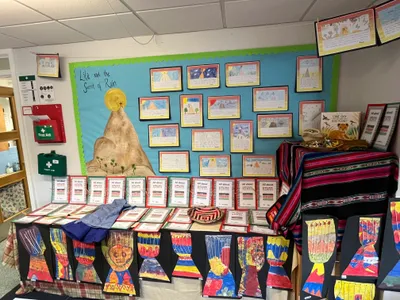
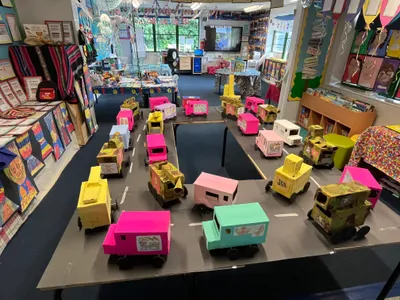
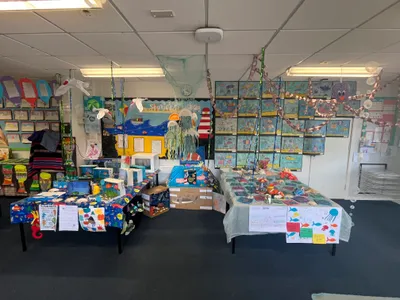
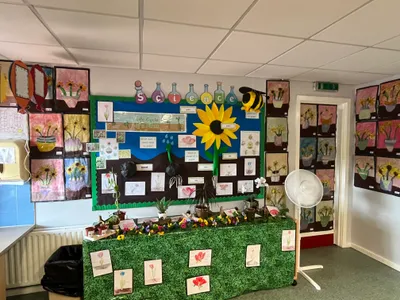
Welcome to Summer Term 2026 in Year 2!
Year 2 Diary Dates Summer Term 2026
Monday 13th April - INSET, parent/teacher consultations (1-3:30pm online, 4-7pm face to face)
Tuesday 14th April - First day for children
Friday 24th April - FoC PTA meeting, 7pm
Friday 1st May - 2GR class assembly, 9:05am
Monday 1st May - Bank Holiday, school closed
Friday 8th May - 2C class assembly, 9:05am
Monday 25th - Friday 29th - Half Term Break
Monday 8th June - INSET, school closed to children
Thursday 11th June - Sports Day
Thursday 18th June - Year 2 Southend Sealife Centre visit
Thursday 25th June - School finishes at 1:15pm, Exhibition Evening 4-6pm
Saturday 4th July - FoC Summer Fayre
Thursday 9th July - Transition Day
Monday 20th July - FoC PTA meeting and AGM, 7pm
Thursday 23rd July - Last Day of term, 1:15pm finish
Link to the school calendar
Link to the school term dates
Year 2 Overview
Please see the overview below for all the exciting things that you will be learning this year!
Homework 25.05.26
Spellings
was, watch, we, wear, were
Spelling rule
Maths
In this learning sequence, pupils explore two strategies to double two-digit numbers - regrouping
and written addition methods. When halving two-digit numbers, multiples of ten are explored first
and then regrouping is used to aid the calculation.
Pupils then apply strategies to money in order to calculate double and half of amounts and to
identify possible coin combinations. Finally, doubling and halving is applied to worded money
problems.
Questions to ask, whilst reading with your child
Spelling rules
Please find our spelling rules for this half term
| Rule | Tip | Example words |
| The or sound spelt a before l and ll | all, tall, always, already, altogether, walk, chalk, stalk | |
| adding 'ed' to words |
if the words ends in y - change to and i then add ed
If there are 2 consonants just add ed
If there is a short vowel sound, double the consonant and add ed |
dry -> dried
hunt -> hunted
spot-> spotted
|
| The soft c sound | when a c comes before i,y or e is usually makes the s sound. | city, cell, exercise, icy, cycle, rice, mice |
| Adding the suffix –y |
If there is a short vowel sound you double the consonant |
mud -> muddy run -> runny |
|
Adding the suffix –y |
if the word has an e you take it off and add a y |
shine -> shiny wave -> wavy |
|
Adding the suffix –ly |
When a word ends in y we swap the i for a y otherwise no change to root. |
happy ->happily easy-> easily soft -> softly |
| The n sound spelt kn and gn | gnome. know, knife | |
|
Adding the suffix – ing |
If the word ends in a short vowel sound and a consonant, we double the consonant. Otherwise, no change. |
play -> playing put -> putting glow-> glowing sip -> sipping |
|
j There are a a range of ways to present the 'j' sound.
|
j - before a, o u
g before e, i, y
ge at the end
dge after the short vowel sounds a,e,i,o or u |
join, adjust
gentle, giant
charge large
badge bridge |
Reminders
P.E. (from April 2026)
Outdoor PE lesson - Wednesdays (both classes)
Indoor PE lesson - 2C on Thursdays and 2GR on Fridays
On these days, children are to come into school dressed in their PE kit. Please ensure they are in weather appropriate clothing as they will be outside at lunch and break times in these clothes.
Please also ensure that all parts of your child(ren)'s kit is clearly labelled. Long hair must always be tied back and it would be safer if earrings were not worn.
Libarary
Year 2 library visit days are:
Wednesdays - Class 2GR
Wednesdays - Class 2C
Reading Books
Please ensure that your child reads everyday at home, in addition to the daily reading they do at school. We can not stress enough how important this is in helping your child to become a confident and fluent reader. Please send reading books and reading records into school each day.
Reading at home
Using books at home
- Read to a grown up and answer questions about your book - your grown up can use the questions on your bookmark
- Read together with a grown up - taking turns to read
- Read to sibling, pet or teddy bear!
- Re-tell the story in your own words
- Predict what will happen at the end of the story then read the book to see if you were right
- Draw a cartoon of the story
Using OXFORD OWLS
The link below will take you to the free online library. A Year 2 account has been created for your use.
https://www.oxfordowl.co.uk/for-home/find-a-book/library-page/
Username: square20
Password: school
The Oxford Owl website is a great, free resource that enables you to access online texts for your child. These are the same schemes of books we have in school. The books are all grouped by age range, but you may wish to look at other ages also.
Herts Library Service
The Herts. Library Services are offering free online books also. Please follow the link below to access it.
https://www.hertfordshire.gov.uk/services/Libraries-and-archives/Books-and-reading/Ebooks-and-Audiobooks/ebooks-and-audiobooks.aspx
Our learning this Summer Term...
Maths
This term we will focus on using our number skills for multiplying, dividing and understanding fractions.
We will be learning to:
- recall our 2, 5 and 10 x tables quickly
- understand multiples and repeated addition as well as number of groups, group size and product
- use our understanding of multiplication and divsion to solve fraction problems
- tell the time to the nearest 5 minutes (any practise of this at home will be very much appreciated!
English
This term we will be reading the book 'On The Way Home' by Jill Murphy. We will be making predictions, and inferences about why the main character creates elaborate stories as well as collecting exciting and interesting vocabulary to use when we write our own versions of the story. During our learning we will be focusing on:
- revising sentence structure, including capital letters at the start of sentences and for proper noun and full stops, exclamation and question marks at the end of sentences
- ensuring our sentences contain a verb and a subject
- consistent use of tense throughout
- use of adjectives and powerful verbs
- correct sequencing of events
In addition, we will be reading One Day On Our Blue Planet - In The Ocean by Ella Bailey.
We will also be continuing to learn how to join letters when writing and we will be focusing on consistent letter size, correct formation and presentation.
Throughout the term, the children will be focusing on:
- learning correct sentence structure, including capital letters at the start of sentences, and for proper nouns, and full stops, exclamation and question marks at the end of sentences
- using adjectives to create expanded noun phrases, e.g. the long, winding river
- expanding sentences using co-ordination (e.g. and, but, so) and sub-ordination (e.g. because, when, if)
- using powerful adjectives and verbs
- learning how to organise our writing for a reader
- Reading texts with increasing fluency and expression
- Reading for meaning and improving our comprehension skills
In our handwriting, we will continue to focus on correct formation and consistent sizing.
For spelling, we will focus on spelling patterns, revising and practising them weekly. We will also continue to learn the Year 2 common exception words that do not follow a spelling pattern.
Science
Our Science topics this term are 'Plants' and 'Living Things and their Habitats'.
We will be learning:
· to observe and describe how seeds and bulbs grow into mature plants
· to investigate and describe how plants need water, light and a suitable temperature to grow and stay healthy.
· to explore and compare the differences between things that are living, dead, and things that have never been alive
· to identify that most living things live in habitats to which they are suited and describe how different habitats provide for the basic needs of different kinds of animals and plants, and how they depend on each other
· to identify and name a variety of plants and animals in their habitats, including micro habitats
· to describe how animals obtain their food from plants and other animals, using the idea of a simple food chain, and identify and name different sources of food.
Year 2 BBC Bitesize - Plants
https://www.bbc.co.uk/bitesize/topics/zpxnyrd
Year 2 BBC Bitesize – Living Things and their Habitats
Living things and their habitats - Year 2 Science - BBC Bitesize
Foundation Subjects
History - We will be learning about seasides of the past, thinking about how our summer holidays are different to holidays in the recent past and the Victorian era.
Geography - We will be finding out why our planet is called 'The Blue Planet' and exploring the world's continents and oceans.
PE Outdoor - Athletics, Target Games and Strike and Field Games
Indoor - Gymnastics and Dance
Computing - We will be learning about different ways to present our work and coding.
R.E - We will be asking why Christians follow Jesus and about the importance of the Torah to the Jewish community.
PSHE - Our jigsaw topic this half term is ‘Relationships' and 'Changing Me'
DT- We will be making our own pizzas. This will involve cooking skills such as selecting ingredients, grating, measuring and cutting.
Music - We will be exploring improvisation and thinking how music makes us feel happy.
Please see below the slides that were shown at last year's parent information talk.
Home Learning
In the case of bad weather and school closure or if your child is isolating but well enough to work, please see the list of activities below, that they can complete at home so they can continue to learn.
The work below will support your child in they key areas of arithmetic, reasoning, and SPAG ( spelling, punctuation and grammar).
As well as these acitivities, you can make use of Mathletics ( for Maths ) and Purple Mash (for reading and other curriculum games).
You can use ' PE with Joe Wicks' you keep you moving. His YouTube Channel is: https://www.youtube.com/playlist?list=PLyCLoPd4VxBuS4UeyHMccVAjpWaNbGomt
What a wonderful world - research
We will be using these links to research the continents in school.
continent - Kids | Britannica Kids | Homework Help
Exploring locations - the seven continents - Years 1/2 - P2/3 - Geography Collection - BBC Bitesize
Continent Facts | The 7 Continents of the World | Fun Facts for Kids (kids-world-travel-guide.com)
Some useful websites:
Mathletics
BBC Bitesize Maths
https://www.bbc.co.uk/bitesize/collections/year-2-and-p3-maths-lessons/1
White Rose Maths
https://whiterosemaths.com/homelearning/year-2/
Purple Mash
https://www.purplemash.com/sch/cranborneen6
BBC Bitesize English
https://www.bbc.co.uk/bitesize/collections/year-2-and-p3-english-lessons/1
Oak Academy
https://classroom.thenational.academy/subjects-by-year/year-2
National Geographic Kids
https://www.natgeokids.com/uk/
Geography
https://world-geography-games.com/
Draw with Rob Art
http://www.robbiddulph.com/draw-with-rob
Home Learning Support
Please find below some resources which may be helpful in supporting your child with their learning at home.
Handwriting
The website 'DoorwayOnline' is a great resource for helping your child develop their letter formation.
Using the link below, you can select the letters you would like your child focus on.
https://www.doorwayonline.org.uk/activities/letterformation/
There are two modes:
- Press and Follow - your child places their finger (if using an iPad/tablet) or the computer mouse (if using a computer or laptop) on the ball and maintains pressure as they follow the formation of the letter, lead by the program.
- Free Draw - your child uses their finger or the mouse to copy over the letter, starting in the correct place, as indicated on the screen.
Using an iPad/tablet is best, with this program, as your child can use their finger directly on the screen.